
Innovative Mental Health Treatments: Exploring Ketamine and TMS Therapy
The landscape of mental healthcare is undergoing a profound transformation. For decades, the standard protocol for treating conditions like major depressive disorder, generalized anxiety, and post-traumatic stress disorder relied primarily on a combination of traditional talk therapy and daily oral medications. Selective serotonin reuptake inhibitors and similar chemical compounds undoubtedly provided relief for millions of individuals worldwide. However, these traditional pharmacological interventions carry a significant limitation: they do not work for everyone.
A substantial percentage of patients suffer from treatment-resistant depression, a clinical classification given when someone fails to experience significant symptom improvement after trying multiple distinct antidepressant medications. For these individuals, daily life becomes a exhausting battle against a persistent cloud of cognitive fatigue and emotional numbness. Fortunately, breakthroughs in neuroscience have paved the way for advanced, non-traditional interventions that target the brain through entirely different biological mechanisms. Among these innovations, Ketamine Infusion Therapy and Transcranial Magnetic Stimulation stand out as two of the most effective, evidence-based options reshaping modern psychiatry.
The Cellular Evolution: Understanding Ketamine Infusion Therapy
Ketamine was originally synthesized in the mid-twentieth century as a fast-acting dissociative anesthetic, widely valued in emergency medicine and battlefield surgery for its exceptional safety profile and ability to preserve respiratory function. However, researchers eventually noticed an unexpected side effect in sub-anesthetic doses: patients waking up from procedures reported an immediate, profound lifting of their chronic depressive symptoms. This observation triggered a wave of clinical trials that ultimately revolutionized our understanding of rapid-acting psychiatric interventions.
Shifting the Chemical Paradigm
Traditional antidepressants work by slowly increasing the availability of monoamine neurotransmitters, such as serotonin, norepinephrine, or dopamine, in the synaptic cleft between brain cells. This process can take four to six weeks to induce structural changes in the brain. Ketamine operates on a completely different chemical pathway. It acts as an antagonist to the N-methyl-D-aspartate receptor, rapidly blocking it and triggering a sudden surge of a different neurotransmitter called glutamate.
The Mechanism of Rapid Synaptic Growth
Glutamate is the primary excitatory neurotransmitter in the human central nervous system. The sudden influx of glutamate sets off a biological cascade that stimulates the production of brain-derived neurotrophic factor. This growth factor acts like a fertilizer for the brain, promoting neuroplasticity, which is the brain ability to physically restructure and adapt. Chronic depression and severe stress cause the synaptic connections between neurons in the prefrontal cortex to literally wither away over time. Ketamine reverses this structural degradation, prompting the rapid regrowth of dendritic spines and repairing broken neural pathways within hours of a single administration.
The Clinical Experience: Infusion Dynamics
In a controlled psychiatric setting, ketamine is most frequently delivered via a slow, intravenous infusion lasting roughly forty minutes. Because the dose is significantly lower than what is used in surgical anesthesia, patients remain fully conscious but enter a deeply relaxed, dissociative state. During this time, individuals often report feeling detached from their physical bodies, experiencing altered sensory perceptions, and gaining objective, unemotional insights into their past traumas or negative thought loops. The acute dissociative effects fade quickly after the infusion ends, but the underlying neurological repair mechanisms continue working for days afterward.
The Electromagnetic Blueprint: Exploring Transcranial Magnetic Stimulation
While ketamine addresses mental health challenges through chemical restructuring, Transcranial Magnetic Stimulation utilizes the laws of physics to modulate neural activity. Developed as a non-invasive therapeutic tool, TMS offers a highly localized, drug-free alternative for individuals who cannot tolerate the systemic side effects of oral medications, such as weight gain, sexual dysfunction, or chronic lethargy.
The Physics of Brain Stimulation
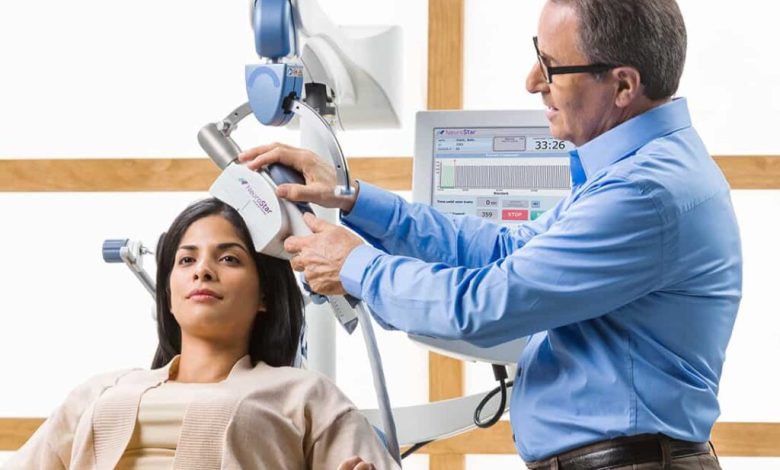
The human brain operates on an intricate system of bioelectrical currents. TMS leverages this biology through Faraday law of electromagnetic induction. During a typical treatment session, a patient sits comfortably in a specialized chair while a technician places a padded, curved magnetic coil gently against a specific region of their scalp.
This coil generates highly focused, rapid magnetic pulses that pass entirely seamlessly through the skin, muscle, and skull tissue without causing any physical pain. These magnetic fields are identical in strength to those produced by a standard magnetic resonance imaging machine. When these localized magnetic pulses reach the brain tissue beneath the skull, they induce a small, highly targeted electrical current that forces the underlying neurons to fire.
Targeting the Neurological Roots of Depression
Neuroimaging studies consistently demonstrate that individuals suffering from major depressive disorder exhibit a distinct lack of electrical activity and reduced blood flow in a specific region of the brain known as the left dorsolateral prefrontal cortex. This structural zone acts as a command center for executive functioning, emotional regulation, and logical processing.
By aiming the TMS coil precisely at this underactive area, the rapid magnetic pulses physically wake up the dormant neurons. Over a standard course of treatment, which typically involves daily twenty-minute sessions spanning four to six weeks, this repeated stimulation strengthens the synaptic connections in the prefrontal cortex. This localized activation restores healthy metabolic activity and re-establishes normal communication pathways between the front of the brain and the deeper, emotion-driven structures like the amygdala.
Comparing Ketamine and TMS: A Strategic Framework
Choosing between Ketamine Infusion Therapy and Transcranial Magnetic Stimulation requires a careful evaluation of an individual unique clinical history, lifestyle, and therapeutic goals. Both treatments boast impressive success rates for treatment-resistant depression, but their logistical parameters and immediate effects differ significantly.
-
Speed of Action: Ketamine is unmatched in its rapidity. Patients often experience a dramatic reduction in severe depressive symptoms and suicidal ideation within hours of their first or second infusion. TMS requires a longer, cumulative commitment, with most patients beginning to notice sustained improvements in mood and cognitive clarity around the third or fourth week of daily treatment.
-
Systemic vs. Localized Impact: Ketamine circulates through the entire body, inducing temporary systemic effects like mild blood pressure elevation, dizziness, and dissociation during the treatment phase. TMS is completely localized to the skull area; because no chemical substance enters the bloodstream, there are absolutely no systemic side effects.
-
Treatment Longevity and Maintenance: A standard initial series of ketamine consists of six infusions over two weeks, followed by periodic maintenance boosters every few weeks or months to sustain the neuroplastic benefits. A full course of TMS involves intensive daily sessions for a month, but successful completion often results in long-term remission that can last for a year or more before any maintenance is required.
The Future of Interventional Psychiatry
The emergence of Ketamine and TMS therapies represents a monumental paradigm shift in how we approach the human brain. We are moving away from an era of passive, generalized chemical management and stepping into an age of precise, active neurological restoration. These treatments validate a fundamental truth of modern neuroscience: the brain is not a static, unchangeable machine. It is a dynamic, highly adaptable organ capable of profound structural healing when provided with the correct biological or electromagnetic stimulus. As research continues to refine these protocols, these innovative therapies offer a tangible, life-saving beacon of hope for individuals who once believed they were beyond help.
Frequently Asked Questions
Can Ketamine and TMS therapies be performed simultaneously?
Yes, emerging clinical research indicates that combining Ketamine Infusion Therapy and Transcranial Magnetic Stimulation can produce a powerful synergistic effect for exceptionally severe cases of treatment-resistant depression. Ketamine acts quickly to induce rapid neuroplasticity and open a biological window of cellular growth, while TMS can then precisely direct that neuroplasticity by targeting and strengthening specific, underactive neural circuits over the following weeks.
Is the nasal spray version of ketamine just as effective as the intravenous infusion?
The nasal spray variation, known chemically as Esketamine, is approved by regulatory authorities for treatment-resistant depression and is highly effective. However, intravenous infusions offer a slightly higher degree of clinical control. With an intravenous line, a practitioner can precisely adjust the medication delivery rate in real-time based on the patient immediate psychological and physiological response, ensuring one hundred percent bio-availability.
Will undergoing TMS therapy affect my memory or cognitive abilities?
No. Unlike Electroconvulsive Therapy, which utilizes a generalized electrical current to induce a controlled seizure across the entire brain and can cause temporary memory loss, TMS uses localized magnetic fields that target a very specific, non-convulsive area of the prefrontal cortex. TMS does not affect memory negatively; in fact, many patients report significant improvements in executive functioning, working memory, and focus as their depression lifts.
Are these innovative treatments covered by standard health insurance plans?
Insurance coverage varies significantly between the two modalities. Because TMS has been heavily utilized and studied for a longer duration under strict clinical protocols, it is widely covered by the vast majority of commercial health insurance providers for patients who have documented proof of failing a certain number of antidepressant medications. Intravenous ketamine infusions are often classified as an off-label use for depression, meaning they are frequently an out-of-pocket expense, though the nasal spray variation is increasingly receiving insurance approval.
What does the magnetic pulse of a TMS machine actually feel like during a session?
Most patients describe the sensation of a TMS session as a steady, rhythmic tapping feeling on the scalp, similar to the sensation of a plastic coin tapping against the skin. While the sound of the machine makes a distinct clicking noise, the physical tapping is generally tolerated well. Some individuals experience mild, temporary tension headaches or minor scalp discomfort during the first week of treatment, which easily responds to standard over-the-counter pain relievers.
Are there any specific medical conditions that completely disqualify someone from receiving TMS?
The primary contraindication for Transcranial Magnetic Stimulation is the presence of any non-removable, magnetic metal implants located anywhere within twelve inches of the treatment coil. This includes metallic aneurysm clips, cochlear implants, deep brain stimulators, or bullet fragments located in the head or neck area. Standard dental fillings and braces are entirely safe and do not interfere with the magnetic fields.


